
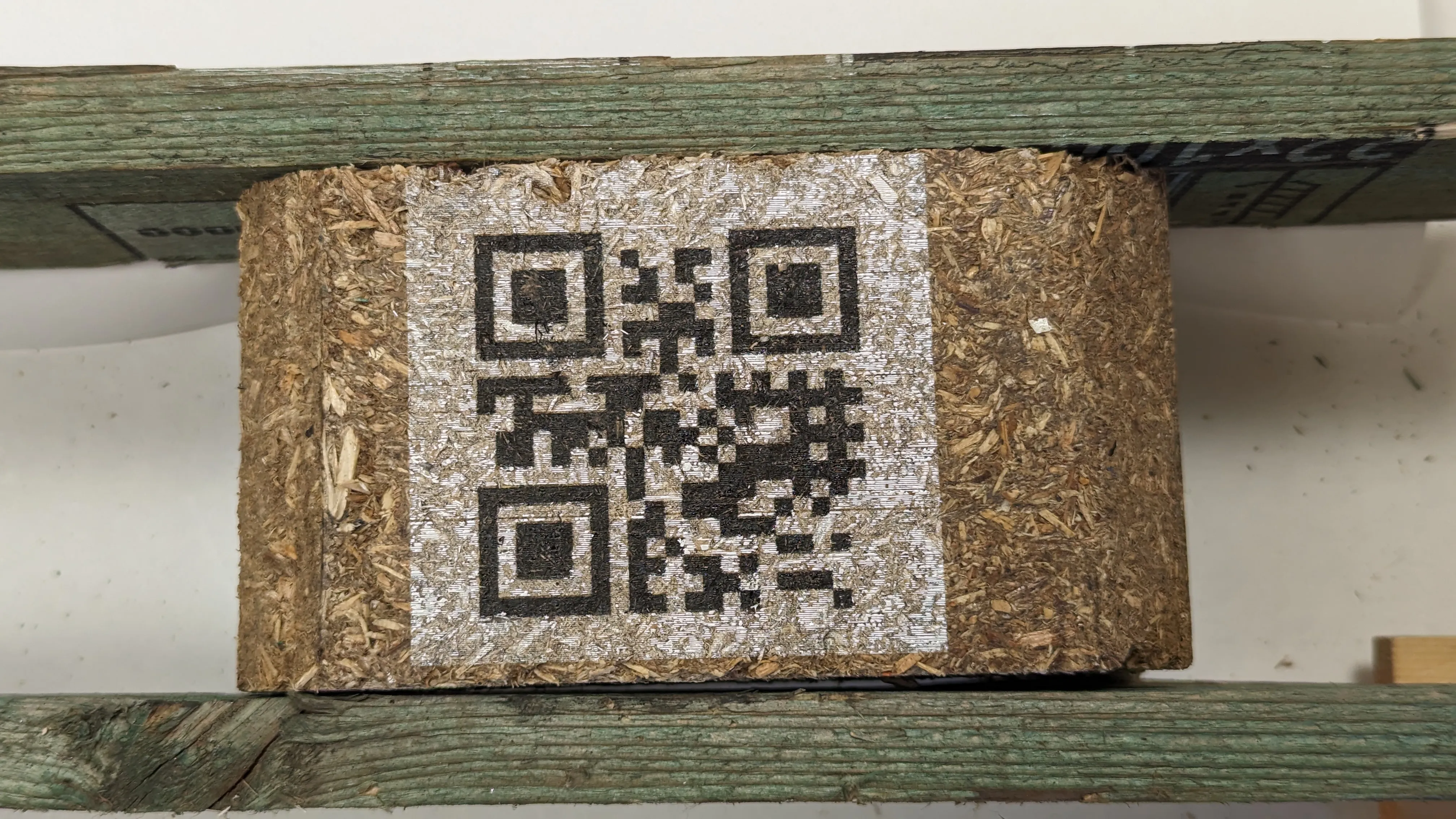
The EU Deforestation Regulation (EUDR) and the upcoming Digital Product Passports (DPP) place new traceability requirements on wood products. Exactly what the marking should look like has not yet been determined, but the need for unique, machine-readable and durable marking is clear. Choosing the right equipment today gives you the freedom to adapt when the requirements are specified.
What is EUDR?
The EU Deforestation Regulation (EUDR, Regulation 2023/1115) requires that wood products sold within the EU do not contribute to deforestation. This means that sawmills, pallet manufacturers and other operators in the wood industry must be able to document the origin of the timber, from harvesting site to finished product.
Timeline:
- Large and medium-sized companies (former EUTR operators): 30 December 2026
- Other small companies: 30 June 2027
The regulation has been changed and postponed several times. The exact requirements for how marking and traceability are to be implemented in practice have not yet been fully determined. But one thing is certain: unique traceability per unit will be required.
What is a Digital Product Passport (DPP)?
A Digital Product Passport (DPP) is a standardised digital information system that follows a product throughout its entire life cycle, from raw material to end-of-life. The passport is accessed via a physical marking on the product, usually a QR code or Datamatrix, which links to a database with verifiable information about content, origin, environmental performance and traceability.
DPP is being introduced through the EU’s Ecodesign for Sustainable Products Regulation (ESPR), which was adopted in 2024 and is part of the European Green Deal. Its purpose is to strengthen transparency, enable a circular economy and give consumers, authorities and companies access to reliable product data.
The core: Every physical product sold on the EU market must carry a machine-readable code that links to digitally stored, standardised and verifiable information about the product’s sustainability and origin.
Timeline: when do the requirements apply?
- 2024: ESPR adopted. The Ecodesign for Sustainable Products Regulation enters into force. The framework for Digital Product Passports is established.
- 2025–2026: Delegated acts. The European Commission defines product-specific requirements. Steel and textiles are the “front runners”. Skogforsk publishes a data protocol for wood products.
- 2027: First mandatory DPPs. Batteries, textiles and steel are first out with mandatory Digital Product Passports. Construction products and furniture (which contain wood) are expected in the next wave.
- 2028–2030: Expansion. DPP is extended to more product categories. Pure wood products are expected to be phased in during this period, but affected suppliers in the chain must be ready as early as 2027.
Why act now? Wood is used as an input in furniture, construction products and packaging. These product categories are covered early. Sawmills and wood producers therefore need to be able to deliver traceability data even before requirements formally apply to pure wood products.
What should the passport contain? Six data categories
Skogforsk’s report “Digital Product Passports for wood-based products” (2026) defines six categories that a DPP for wood should cover:
- Product identification. Unique identity, article number, batch, dimensions. Links the physical piece of timber to its digital passport.
- Raw materials and origin. Tree species, geolocation of harvesting, certifications (FSC/PEFC), EUDR reference number.
- Production processes. Sawing, drying, planing, impregnation. Which steps has the timber gone through, and where?
- Use phase. Strength class, durability, maintenance requirements. Information that governs how the product is used and repaired.
- Environmental performance. Climate footprint (EPD data), energy consumption in production, recycling potential and life cycle assessment.
- Social sustainability. Working conditions, regulatory compliance, responsible trade. Increasingly important in public procurement.
What does this mean for marking in practice?
The exact format has not yet been specified in detail. But to hold enough information (geographic coordinates, certificate of origin, timestamp and reference number), everything points to Datamatrix or QR codes as the practical answer, most likely combined with a human-readable text code. These 2D codes can carry significantly more data than a traditional barcode and are already established in similar traceability systems within the EU.
What is clear is that:
- Each unit or batch needs a unique identifier
- The code must be readable and durable, even after impregnation, outdoor storage and transport
- The system must be able to integrate with ERP and the EU’s information systems
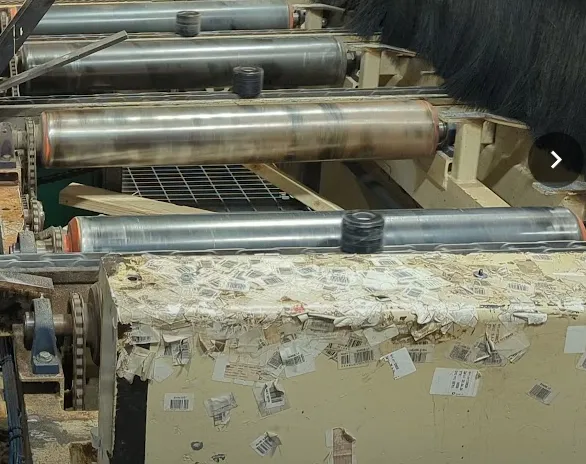
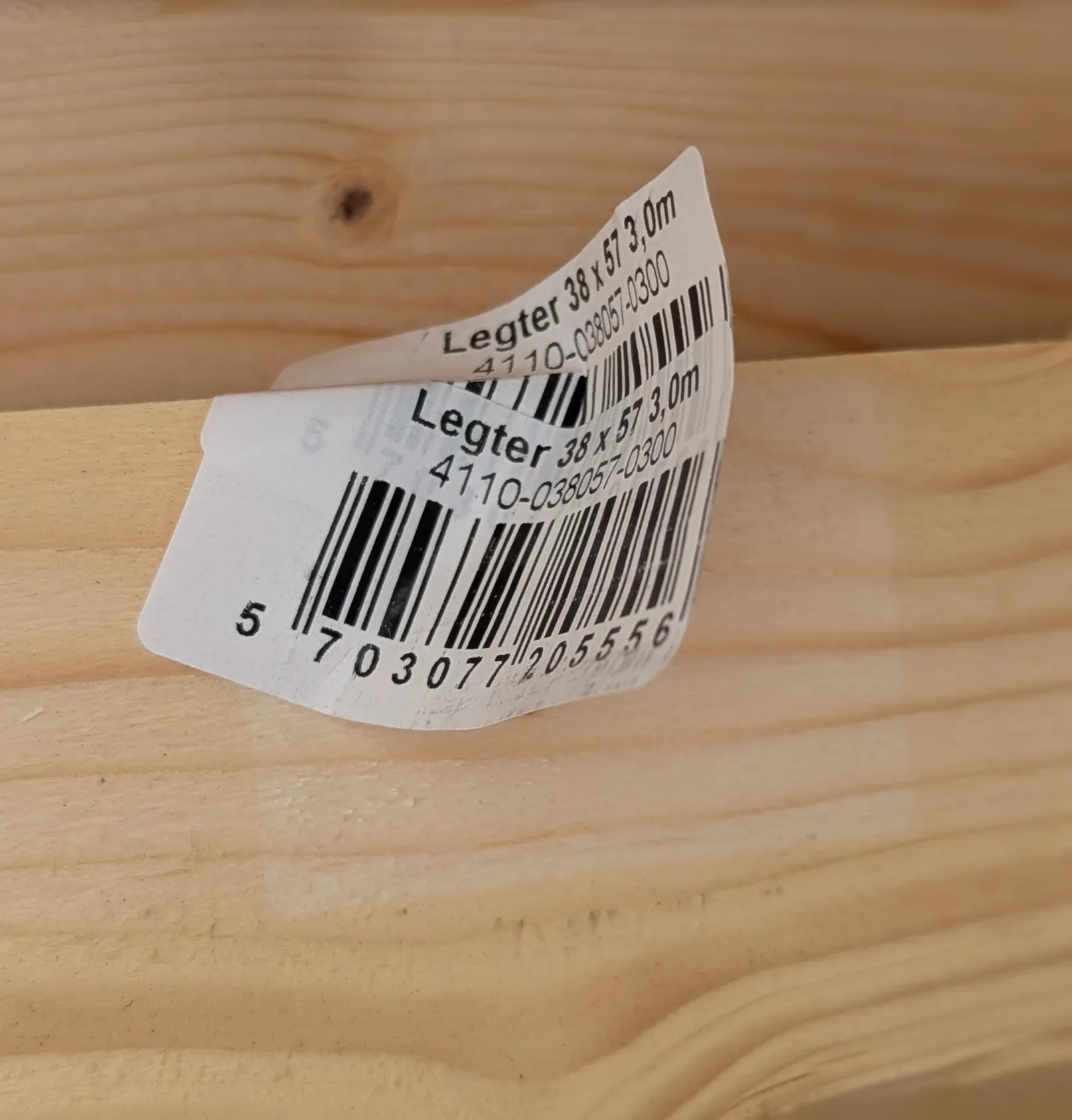
Labels on live material: a well-known and costly problem
Traditional labelling is a natural starting point when marking wood products, but on live material such as wood or sawn timber it does not work.
The consequence: The label comes off during transport, storage or further processing, and traceability is broken. Exactly what EUDR does not allow.
The problems with labels on wood are well known in the industry:
- Moisture and sap prevent the adhesive surfaces from adhering properly to freshly sawn timber
- Temperature fluctuations during outdoor storage cause the adhesive to crack and the label to come off
- Mechanical handling (forklifts, conveyors and sorting equipment) tears labels off
- Impregnation dissolves adhesive and ink, making the code unreadable or causing it to disappear completely
- Ageing and UV light break down the label material long before the product reaches the end customer
A lost label is not just an administrative problem. It is a gap in traceability that can mean the entire batch fails to meet the requirements of EUDR and DPP.
The solution: mark directly on the wood fiber
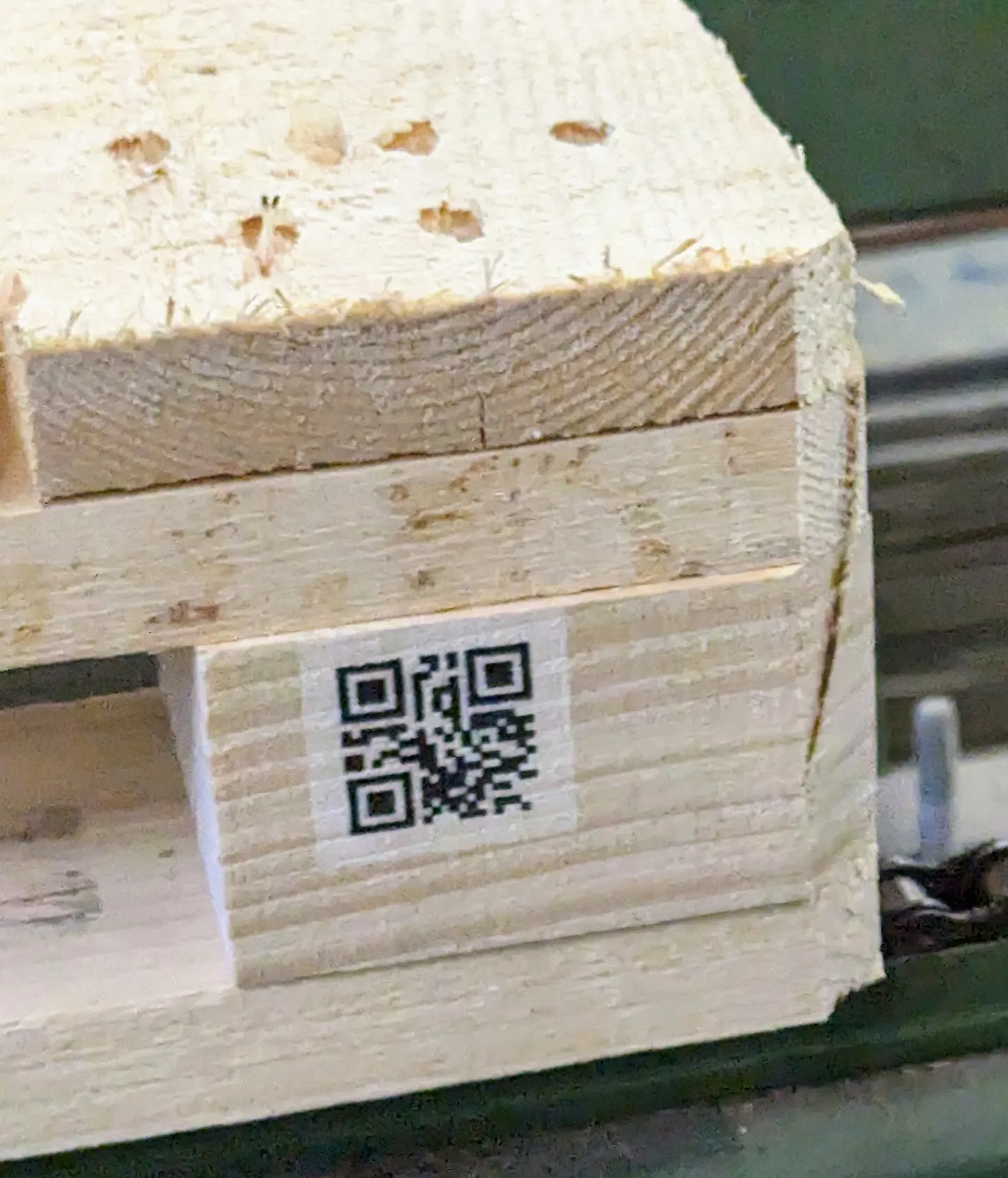
GSI Nordic’s UV inkjet printers apply the ink directly into the wood surface, where it is polymerised by UV light and forms a plastic-like film that stays put: not on the wood, but in it. There is no adhesive to dissolve, no material to tear off and no label to lose. The marking is as permanent as the timber itself.
- Withstands impregnation, pressure treatment and surface treatment
- Resistant to wet conditions, cold and prolonged UV exposure
- Readable with industrial code readers and mobile cameras all the way to the end customer
- Black and white ink always provide sufficient contrast, even on dark or discoloured wood or in the presence of knots or code strings
Why future-proof marking equipment is crucial
While the requirements are still evolving, it is more important than ever to choose a marking solution that can be adapted when the rules change, without replacing the hardware. GSI Nordic’s NoLabel® and Colorize® printers are built for exactly this.
Software that can be updated
The printed code is controlled entirely by software. Adapting to change requires modern hardware and, above all, a future-proof architecture.
Our marking equipment was developed in the 2020s, is network-based and is built from the ground up to adapt to changing requirements, regulations and new protocols.
Integration with higher-level systems
The printers communicate with ERP, MES and databases. Unique codes per unit are generated automatically from order data and can be linked directly to the EU’s traceability system.
The printers can themselves be connected to camera systems to ensure that the codes are correct.
Durable marking all the way
UV-curable ink in black and white forms a plastic-like surface that withstands impregnation, wet conditions, UV light and mechanical wear. Traceability survives the timber’s entire life cycle, from sawmill to end customer.
Resolution and speed without limitations
Datamatrix and QR codes require high resolution for reliable readability, and the printers must withstand both the environments and the production speeds they will operate in. Our printers deliver black+white marking with extreme readability at speeds exceeding current production speeds. Marking never holds up production, neither today nor when the requirements become stricter.